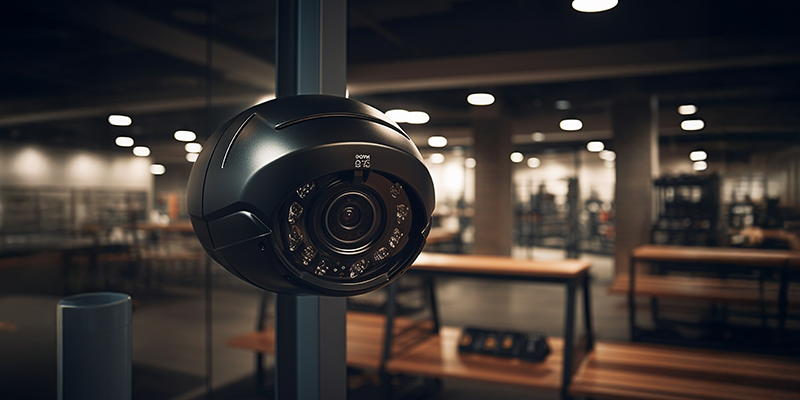
You walk into the gym and head toward your workout, while somewhere above you, a small camera quietly records. Most people hardly notice it, but the presence of surveillance in gyms raises an important legal question: Is this actually allowed, and if so, to what extent?
When surveillance becomes data processing
In South Africa, the answer lies in the Protection of Personal Information Act, commonly referred to as POPIA. This law regulates how personal information is collected and used, and it applies directly to surveillance cameras. What many people do not realise is that video footage of identifiable individuals is legally classified as personal information. This means that when a gym installs cameras, it is not merely implementing a security measure but is engaging in the processing of personal data, which brings with it a range of legal obligations.
Security is valid, but not without limits
The law does not prohibit gyms from using cameras. In fact, security and safety are generally accepted as legitimate reasons for surveillance.
However, POPIA requires that any such use must be lawful, reasonable, and not excessive. This creates a balancing exercise between the gym’s interest in maintaining a safe environment and the individual’s right to privacy. A camera positioned at an entrance or reception area is relatively easy to justify, whereas surveillance in more sensitive areas of the gym becomes increasingly difficult to defend from a legal standpoint.
Visibility and disclosure as legal requirements
A critical aspect of compliance is transparency. Gyms are required to inform members that they are being recorded and to explain the purpose of the surveillance. In practice, this is usually done through clearly visible signage. If a gym has installed cameras but has failed to notify its members, this omission may render the entire operation unlawful, regardless of whether the underlying purpose is legitimate. The obligation to inform individuals is not a mere formality but a core requirement of lawful processing under POPIA.
Balancing operational needs with privacy rights
Although consent is one way to justify the collection of personal information, it is not always required in this context. Gyms may rely on what is known as a legitimate interest, such as the need to ensure safety and prevent theft.
However, this does not relieve them of their broader responsibilities. Even where consent is not obtained, the gym must still ensure that the surveillance is limited to what is necessary, that it does not intrude unnecessarily on privacy, and that members are properly informed.
Recognising the signs of non-compliance
For gym members, the practical implications are relatively clear. The presence of cameras in general workout areas is not inherently problematic, provided that the gym complies with its legal obligations. However, a lack of notification or the use of overly intrusive measures should raise concerns about whether the law is being followed.
The law focuses on how cameras are used
Ultimately, surveillance in gyms is not a free-for-all. POPIA permits it within defined limits and imposes a duty on gym operators to act responsibly and transparently. The legality of a camera is not determined simply by its presence, but by whether it is used in a manner that respects both the purpose of security and the fundamental right to privacy.
While every reasonable effort is taken to ensure the accuracy and soundness of the contents of this publication, neither the writers of articles nor the publisher will bear any responsibility for the consequences of any actions based on information or recommendations contained herein. Our material is for informational purposes.